Maha Yogi Patanjali
Founder Of Yoga
A distinct body of texts known as the haṭhayoga corpus appears around the 11th century and emphasizes physical practices most likely used by ascetic communities.
The ultimate aim of yoga is described by various words (e.g., kaivalya, samādhi, mokṣa, etc.); it is often described as an experience of an individual soul’s uniting with the divine, and/or becoming liberated from the material world.
The Word Yoga Means…Union/Join/Reconnection
Union/combination of the breath & mind, Body & mind, Inner self & over self, Inner Consciousness & supreme consciousness. Maharshi Patanjali founded yoga 10,000 years ago.
Definition of yoga is …”Resisting the routine wanderings / thoughts of the mind” {Yogaha chittavritti nirodhaha}.

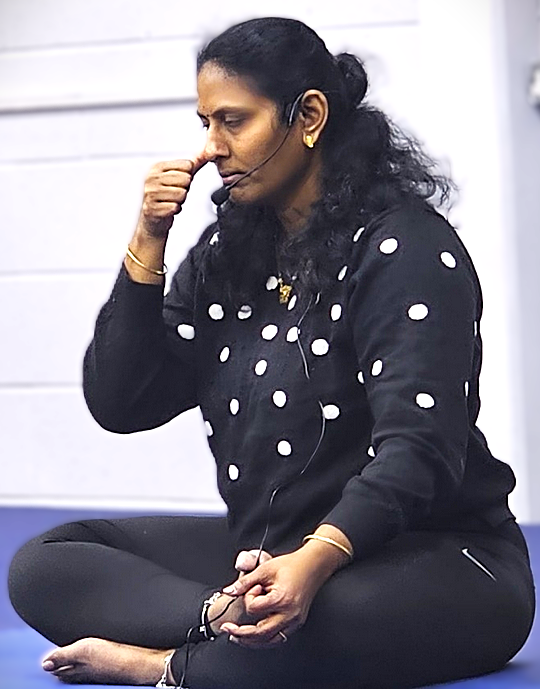
Padmavathi Pulamarasetti
Yoga and Dance Teacher
Is a highly dedicated and professionally trained yoga teacher with over fifteen years of extensive experience in yoga practice, instruction, and holistic wellness training. She has been practicing yoga since her childhood and developed deep expertise through continuous dedication and disciplined practice.
She completed her Diploma in Yoga Science and earned her 200-Hour Yoga Alliance Certification from Sri Krishna Foundation.
As part of her professional career, she worked as a yoga teacher in Vietnam at California Fitness & Yoga Center and other yoga centers for nearly two years. She later continued conducting yoga classes in the United Kingdom. Currently, she teaches General Yoga and Chair Yoga classes under the Indian Association Manchester in Manchester.
She provides specialized yoga sessions tailored for individuals with various health conditions and wellness goals. Her teaching approach integrates multiple yoga traditions to meet the unique needs of her students.
Yoga Styles She Teaches:
Power Yoga
Dynamic Yoga
Satyananda Yoga
Ashtanga Yoga
Hatha Yoga
She skillfully blends different yoga methodologies to deliver balanced, safe, and effective training.
There are eight limbs in the science of yoga.
- Yama: universal morality.
- Niyama: personal observances.
- Asanas: body postures. (what we usually think of as ‘yoga’)
- Pranayama: breathing exercise and control of prana.
- Pratyahara: control of the senses.
- Dharana: concentration and cultivating inner perceptual awareness.
- Dhyana: devotion, meditation on the divine.
- Samadhi: union with the divine.
Do's And Don'ts Of Eight Limbs In The Science Of Yoga.
Benefits Of Yoga
- Yoga improves flexibility.
- It builds strength.
- Yoga enhances balance.
- It promotes better posture.
- Yoga increases energy levels.
- It reduces stress.
- Yoga boosts mood.
- It aids concentration.
- It supports better sleep.
- Yoga enhances mind-body connection.
- It aids digestion.
- Yoga supports heart health.
Grab An Opportunity